Sunday, August 30, 2020

The Difference Between 'CHIANTI' Wine And 'CHIANTI CLASSICO' Wine

English: Chianti Classico Riserva fromVolpaia
Chianti Classico Riserva fromVolpaia
(Photo credit: 
Wikipedia)
Less experienced consumers tend to believe that a DOCG 'Chianti' wine and a DOCG 'Chinati Classico' wine are the same things.

Nothing more wrong than that!

Chianti Classico is a wine produced in the Chianti area. You may recognize these wines very easily by the 'black rooster' logo on the neck of the bottles.

The 'Chianti Classico Consortium' applies much stricter rules to its producers in comparison to those applied to the producers of 'Chianti'. Let us analyze these differences.

Production area: the Chianti Classico wine is produced within the borders of the namesake area only, whereas Chianti producers can implement their production also outside those borders, including some areas of the Tuscan provinces of Florence, Siena, Arezzo, Pisa, Pistoia, and Prato.

Grapes: While the Chianti Classico uses black grapes only with a minimum basis of 80% of Sangiovese (the typical grape of the Chianti's area) the Chianti wine can use also white grapes such as Malvasia and Trebbiano (in addition to the minimum basis of Sangiovese which is 75% in this case).

Quality standard: without going through the details, it is important to know that the rules of the Chianti Classico Consortium are much more rigid and strict on all the aspects which can have an impact on wine's quality. For example, the 'resa Massima di uva per ettaro di vigneto' (the maximum amount of grapes for hectare) is 75 quintals for Chianti Classico, while for Chianti the limit gets to 90 quintals.

The first version of the DOCG 'disciplinare' (production rules) for Chianti and Chianti Classico dates back to 1984 when Chianti Classico was still considered a sub-category of the Omni-comprehensive Chianti DOCG, although with separate regulations that imposed production rules more stringent than those stipulated for the other Chianti wines. Only in 1996 Chianti Classico obtained the definitive consecration of its importance and its precedence: Chianti Classico, in fact, was recognized as an independent appellation, establishing once and for all its diversity and independence of the other Chiantis.

Chianti and Chianti Classico are not the only traditional wine made in Tuscany, and sangiovese is usually the base of most red variants like Vino Nobile di Montepulciano, Morellino di Scansano, Brunello di Montalcino, Rosso di Montalcino, etc.

A black rooster was the emblem of the Lega del Chianti during the XVII century. Now 2005 the black rooster is the emblem of the Chianti Classico producers association, all Chianti Classico wines have that symbol on the neck of the bottle indicating that the wine is produced in the Classico area and according to the Chianti Classico Consortium rules.

In summary, especially in the last years, Chianti Classico Consortium's policy is to safeguard wine's quality to the detriment of quantity, mainly because of the growing number of high-quality wine all over the world. Furthermore, there is another aim which is to safeguard the quality aspects specific to the area making the Gallo Nero products unique. In that matter, on top of the Chianti Classico wine, the Vin Santo and the Olive Oil should also be mentioned.


Sunday, August 23, 2020

Choosing the BEST PLANTS for your GARDEN


Many times we buy plants on impulse then find there is nowhere in the garden that really suits them. Before buying plants carefully examine your garden to see how much sun and shade it gets, whether the soil is well drained or waterlogged and whether your aspect is sheltered or windswept. You'll then be equipped to go and buy the best plants for your situation; shade-loving plants for the sheltered areas, sun-lovers for the warm spots, drought-resistant plants for the parched areas which may be either sunny or shaded, and swamp plants for the poorly-drained parts.

But wait! Test your soil first, to determine the pH level of your soil and what kind of nutrients you need to add if any. Is the soil acid or alkaline? Most plants prefer soil that is slightly acidic, but there are some that must have alkaline soil to grow.  You can alter the soil's pH level, but it's much easier to simply plant for the soil you have.

Now you are ready to plant. Well - almost. Will you plant in groups or singly? If you buy 'one of everything' your garden may seem rather spotty. Group plantings are organized, harmonious and you can vary the color for interest.

Before planting out, place your chosen plants around the garden bed in their pots to see how they will look. Re-arrange them until you are satisfied. Grouping plants in sets of threes or fives usually looks better than planting in groups of even numbers. Be sure that you have an interesting combination of colors and textures of plants. Tall plants should go to the back, or the center if your garden will be viewed equally from all sides. Try to keep your plants away from trees. The roots of trees are fiercely competitive and will steal all the nutrients and moisture meant for your flowers.


The right color scheme is one way to maintain harmony in your garden. Imagine the color of the flowers when they are in bloom. Some colors may clash with others, but can still be planted side-by-side if they have a different blooming season. Foliage color is also important. Many flower plants have silver, grey or purplish foliage that is just as attractive as the flower. This means that they are still attractive well past the blooming season and so have added value.

Sunday, August 16, 2020

How long to cook a BEEF STEW in a CROCKPOT?

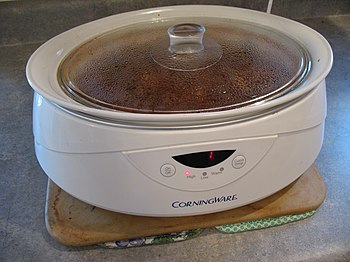
a slow cooker Oval Crock Pot
A slow cooker Oval Crock Pot (Photo credit: Wikipedia)
According to wikihow.com, “Beef stew is best cooked over low heat for a long period of time, making it a perfect candidate for crockpot cooking. Traditional beef stews are made from cuts of beef like chuck roast, but you can also make a slow-cooked beef stew using meatballs formed with ground beef. Keep reading for more information about cooking various types of beef stew in your crockpot.” 


Here are the ingredients for a traditional beef stew

2 Tbsp (30 ml) vegetable oil
2 lb (900 g) beef stew meat, cut into 1-in (2.5-cm) cubes
1/4 cup (60 ml) all-purpose flour
1/2 tsp (2.5 ml) salt
1/2 tsp (2.5 ml) ground black pepper
1 clove garlic, minced
1 bay leaf
1 tsp (5 ml) paprika
1 tsp (5 ml) Worcestershire sauce
1 onion, chopped
1 1/2 cups (375 ml) beef broth
3 potatoes, diced
4 carrots, sliced
1 celery stalk, chopped


“Heat the oil in a large skillet. Pour the oil into a large skillet and heat on the stove over medium-high heat. Meanwhile, make sure that your beef and vegetables are already prepared. The beef should be cut into 1-in (2.5-cm) cubes. You can usually find pre-cut beef stew meat in the butcher's department at the grocery store, but if not, you can trim and cut a chuck roast or bottom round cut.

The garlic clove should be minced. If using pre-minced garlic, use 1/2 tsp (2.5 ml). If using garlic powder, use 1/8 tsp (0.625 ml).

The onion and celery should be roughly chopped.
You can use 3 large baking potatoes or 6 to 9 baby potatoes.
Use 4 standard carrots or 2 cups (500 ml) baby carrots”
Here is another method from the same website, “Coat the beef with flour, salt, and pepper. Mix the flour, salt, and pepper in a large bowl. Add the beef to the mixture and toss to coat.
Make sure that the flour, salt, and pepper are thoroughly combined before adding the beef.
Stir the beef well so that all sides of each piece are covered. You should have little to no flour left once done.
Coating the beef in flour allows the beef to brown better and also makes the finished stew thicker.”

Here is the method of using a slow cooker, “Place all the beef stew ingredients in the slow cooker. Transfer the beef to the crockpot. Layer the potatoes, carrots, onion, celery, and garlic on top. Add the bay leaf, paprika, and Worcestershire sauce, then pour the beef broth over everything”


“The exact order of ingredients does not matter much, but for best results, the beef, potatoes, and carrots should make up the bottom three layers since these ingredients require the most heat to cook through. Note that the heating element of the crockpot is located on the bottom of the device.”

“Keep the crockpot covered as the stew cooks. A slow cooker needs to build up heat in order to cook properly, and the heat will be unable to build up if the lid is kept off or removed during the cooking process”


Sunday, August 9, 2020

CARROTS - Boost Your Nutrition And Your Good Health


Sunday, August 2, 2020

LARDO DI COLONNATA : A Tuscan Delicacy

Lardo di Colonnata
Lardo di Colonnata (Photo credit: Wikipedia)
Pork is a staple food of the mountain regions of northern Italy, where it's often said that a well-butchered pig should leave 'nothing but the oink' behind. As a pig is typically around 30% fat, thrifty locals had to come up with a way to use and preserve this valuable source of protein, and the result is Lardo.

Lardo di Colonnata, to give it its full name, is a delicacy produced from pork fat in and around the Tuscan mountain town of Colonnata. Happily, for fans of cured meat, it's not only a frugal way of preserving pork fat over winter - it's delicious too!

It's made in large vats known as conche, fashioned from marble quarried at the nearby 'white mountain' of Cararra, which are first liberally rubbed with garlic. Next, layers of pork fat, salt, and a special mix of herbs and spices are added until the vats are full. The conche are then sealed with a wooden lid and left in cool mountain caves for 6 months or longer to mature in the clean air.

After the maturation time is over, the conche are opened to reveal a silky-smooth, meltingly tender 'meat' which can be eaten in much the same way as Parma Ham or other prosciutto.

While Lardo is often used to keep roasted meats moist by placing a thin layer over the skin, it is also delicious simply sliced thinly and eaten with bread, olives, and a good extra virgin olive oil as part of an antipasto course. It is not at all tough or greasy, and is well worth trying even if the idea of eating pure fat leaves you a little apprehensive!


Despite the long years of making Lardo in the traditional way, most of the examples that you may find in your local deli or store will have been made in a much more industrial setting, mainly as a result of modern hygiene laws taking precedence over customs and heritage. Gone are the marble conche and the mountain air, replaced by stainless steel and air conditioning.

However, visitors to the area around Colonnata may still be lucky and get hold of Lardo made in the old way that has been proven over the centuries - just don't tell the authorities if you do!


Sunday, July 26, 2020

A Garden of Your Own - Making Use of WILD FLOWERS

English: Some beautiful wild flowers
Some beautiful wildflowers
(Photo credit: Wikipedia)
Like almost all other things created by and in nature, you will find that wildflowers are very dynamic creatures. They grow in splendour, some living to see the changes of the seasons while other terminates in their short lives. Nonetheless, there is a beauty that all wildflowers share which is seldom duplicated by other species of floras.

A wildflower garden is something you would not dismiss for being just-another-creation of the wild. No. Wildflowers are not your typical leaves-petals-roots-stem creatures; they are things that give glory to even the humblest patches of land.

So there is no reason actually for not wanting to put up a wildflower garden of your own- except of course when you really don’t want to. So here are some of the tips we could give to help you establish your own wildflower garden.

Remember that wildflowers are very tough creatures, they could survive in almost all living conditions- literally, from the harshest to well-nurtured settings. So to be able to maximize the growth and beauty of the species of wildflowers you want to grow in your garden, it is bets to research first on what conditions they could best adapt and the conditions that they would barely sustain with.

The best option really is to know what specific environment a wildflower is normally found. This is to say that you should look for its natural environment, metaphorically its roots. This way, you will no longer have to bother how to perfectly maintain a species. All you need to do is to help it settle in your garden, give some shower of love and watch it bloom into maturity.

Some wildflowers could live year after year while others would only take a while to grow. So if the seeds you spread in the garden don't bloom yet, it doesn’t mean that it would never bloom. Maybe the seeds are just waiting for their own season to come.

As you might remember, wildflowers are well suited to the wild where there is obviously no one to tend for them. This is the main reason why they are very low-cost and needs minimum maintenance. You only have to make the garden very suitable for their survival and voila! - You will readily have a self-supporting garden.

You have to establish them though, especially so when they are not in their native setting. Also, if you want to eliminate the weeds and the grass- though they sometimes make good additions if you really want a garden that features the simplest and most natural setting- you have to strategically work on some preparations. While some wildflowers could live alongside weeds and other vegetations, others would are not well-suited for competition. Thus, it is best o learn which wildflowers should be grown in appropriate distance from weed growths.


An ideal wildflower garden requires a basic mixture of wildflower species and native grasses. There is wisdom in incorporating the natural components of their real settings since these are where wildflowers are most well adapted.

While a wildflower garden is not as visually striking than other more sophisticated choices of species, wildflowers are more diverse which makes them a lot more intriguing and beautiful than the refined beauties.


Sunday, July 19, 2020

Six SALMON RECIPES

Salmon intended for consumption as food
Salmon intended for consumption as food (Photo credit: Wikipedia)
Boiled salmon.

Ingredients:- 
6 oz. of salt to each gallon of water, sufficient water to cover the fish. 

Mode:- 
Scale and clean the fish, and be particular that no blood is left inside; lay it in the fish-kettle with sufficient cold water to cover it, adding salt in the above proportion. Bring it quickly to a boil, take off all the scum, and let it simmer gently till the fish is done, which will be when the meat separates easily from the bone. Experience alone can teach the cook to fix the time for boiling fish; but it is especially to be remembered, that it should never be underdressed, as then nothing is more unwholesome. Neither let it remain in the kettle after it is sufficiently cooked, as that would render it insipid, watery, and colourless. Drain it, and if not wanted for a few minutes, keep it warm by means of warm cloths laid over it. Serve on a hot napkin, garnish with cut lemon and parsley, and send lobster or shrimp sauce, and plain melted butter to table with it. A dish of dressed cucumber usually accompanies this fish. 

Time. 8 minutes to each lb. for large thick salmon; 6 minutes for thin fish.  

Note. Cut lemon should be put on the table with this fish, and a little of the juice squeezed over it is considered by many persons a most agreeable addition. Boiled peas are also, by some connoisseurs, considered especially adapted to be served with salmon. 


Salmon and caper sauce.

Ingredients:- 
2 slices of salmon, 1/4 lb. butter, 1/2 teaspoonful of chopped parsley, 1 shallot; salt, pepper, and grated nutmeg to taste. 

Mode:- 
Lay the salmon in a baking dish, place pieces of butter over it, and add the other ingredients, rubbing a little of the seasoning into the fish; baste it frequently; when done, take it out and drain for a minute or two; lay it in a dish, pour caper sauce over it, and serve. Salmon dressed in this way, with tomato sauce, is very delicious. 

Time. About 3/4 hour.  

Collared salmon.

Ingredients:- 
A piece of salmon, say 3 lbs., a high seasoning of salt, pounded mace, and pepper; water and vinegar, 3 bay leaves. 

Mode:- 
Split the fish; scale, bone, and wash it thoroughly clean; wipe it, and rub in the seasoning inside and out; roll it up, and bind firmly; lay it in a kettle, cover it with vinegar and water (1/3 vinegar, in proportion to the water); add the bay leaves and a good seasoning of salt and whole pepper, and simmer till done. Do not remove the lid. Serve with melted butter or anchovy sauce. For preserving the collared fish, boil up the liquor in which it was cooked, and add a little more vinegar. Pour over when cold. 

Time. 3/4 hour, or rather more.      

Curried salmon.

Ingredients:- 
Any remains of boiled salmon, 3/4 pint of strong or medium stock, 1 onion, 1 tablespoonful of curry powder, 1 teaspoonful of Harvey's sauce, 1 teaspoonful of anchovy sauce, 1 oz. of butter, the juice of 1/2 lemon, cayenne and salt to taste. 

Mode:- 
Cut up the onions into small pieces, and fry them of a pale brown in the butter; add all the ingredients but the salmon, and simmer gently till the onion is tender, occasionally stirring the contents; cut the salmon into small square pieces, carefully take away all skin and bone, lay it in the stewpan, and let it gradually heat through; but do not allow it to boil long. 

Time. 3/4 hour.      

Salmon cutlets.

Cut the slices 1 inch thick, and season them with pepper and salt; butter a sheet of white paper, lay each slice on a separate piece, with their ends twisted; broil gently over a clear fire, and serve with anchovy or caper sauce. When the higher seasoning is required, add a few chopped herbs and a little spice. 

Time. 5 to 10 minutes. 


Salmon a la genevese.

Ingredients:- 
2 slices of salmon, 2 chopped shallots, a little parsley, a small bunch of herbs, 2 bay-leaves, 2 carrots, pounded mace, pepper and salt to taste, 4 tablespoonfuls of Madeira, 1/2 pint of white stock, thickening of butter and flour, 1 teaspoonful of essence of anchovies, the juice of 1 lemon, cayenne and salt to taste. 

Mode:- 
Rub the bottom of a stewpan over with butter, and put in the shallots, herbs, bay leaves, carrots, mace, and seasoning; stir them for 10 minutes over a clear fire, and add the Madeira or sherry; simmer gently for 1/2 hour, and strain through a sieve over the fish, which stew in this gravy. As soon as the fish is sufficiently cooked, take away all the liquor, except a little to keep the salmon moist, and put it into another stewpan; add the stock, thicken with butter and flour, and put in the anchovies, lemon juice, cayenne, and salt; lay the salmon on a hot dish, pour over it part of the sauce, and serve the remainder in a tureen. 

Time. 1-1/4 hour.